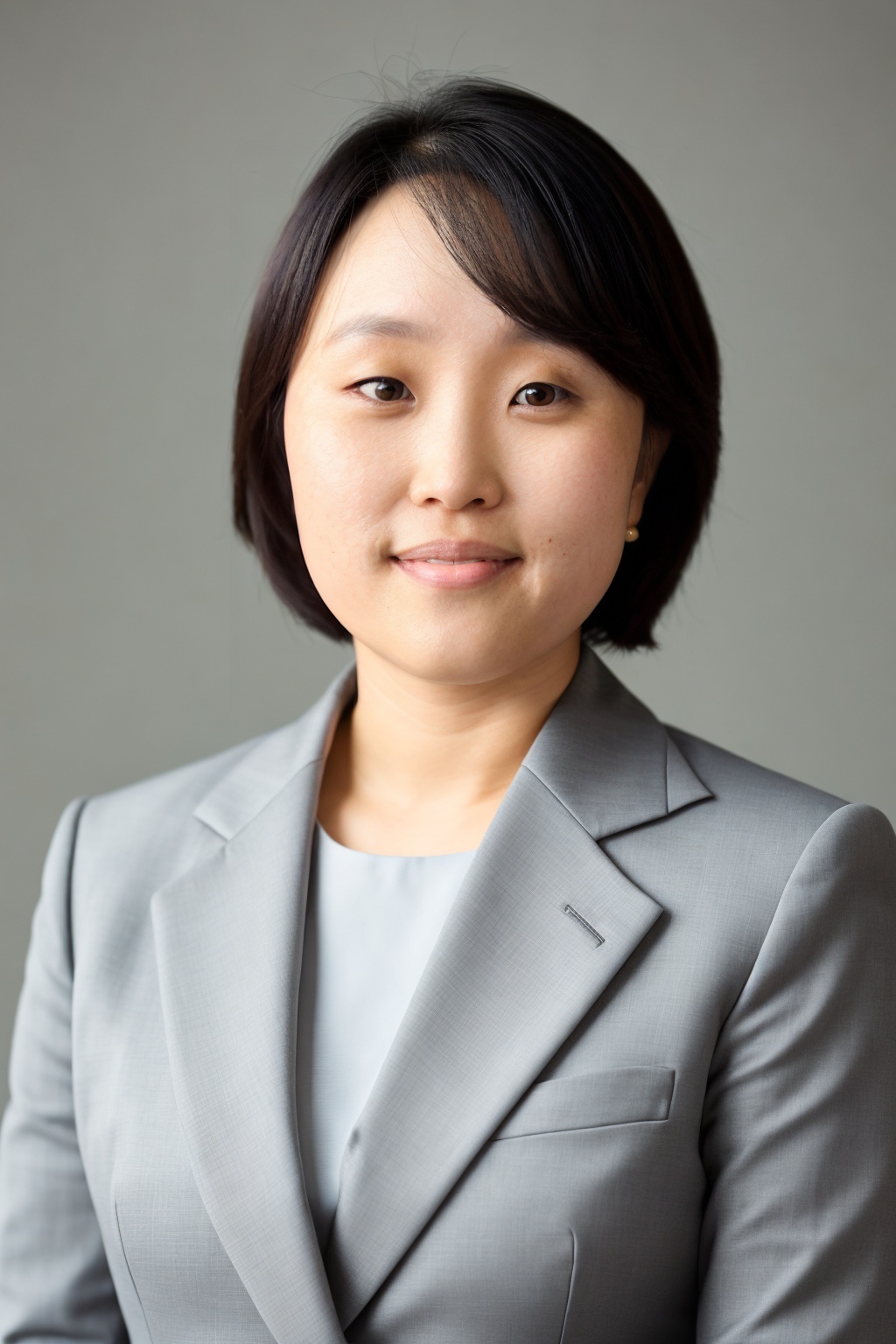
About Me
Hi, I'm a researcher and educator with a unique blend of expertise in communication, learning science, and computer science. My work bridges social science and computer science, enabling me to translate complex social problems, such as skill gaps among social groups, into measurable evidence.
I specialize in experiment and survey design, psychometric measure development, and quantitative and qualitative analysis, including statistical modeling (regressions, mixed-effects models, structural equation modeling) and NLP-based computational methods.
While working as a researcher, I have shown productive outcomes through top-tier peer-reviewed journals, cited over 1,300 times on Google Scholar, leading several research projects as PI and collaborating with computer scientists to design social robots.
Currently, I'm working as an AI Research Librarian at the University of California, Riverside, where I advocate for AI literacy among research communities, designing non-credit curricula and educational tools.
I hold a Ph.D. in Communication from Rutgers University and an M.S. in Computer Science from Yale University.
Applying rigorous scientific methods to capture complex social problems, my dream is to develop evidence-based interventions, such as the design of new technology systems and educational interventions.
Experience
AI Research Librarian
Jan 2026 - Present- As UCR's first AI research librarian, designing non-credit AI literacy curriculum, including hands-on workshops teaching LLM API calls via Colab/Jupyter for graduate students and faculty.
- Building data pipelines and improving assessment/intake systems to track participant outcomes and program statistics.
- Developing and evaluating LLM-based coding pipelines for analyzing open-ended survey responses, benchmarking model outputs against human manual coding to assess reliability and validity.
- Collaborating with makerspace coordinators on a Raspberry Pi-based robot integrated with an LLM API, with plans to launch as an educational tool for a future summer camp program.
Lecturer / Sponsored Researcher
Aug 2021 – Dec 2025- Led 3+ full-cycle research projects in academic research settings. One project, funded by the U.S. Air Force, investigated fairness and responsible robots in human–AI interaction, designing psychometric measures for user-centered fairness evaluation.
- Designed NLP-based cosine-similarity measures to capture people's adoption of LLM-generated text and published the findings in Computers in Human Behavior.
- Conducted a study on need satisfaction and psychological reliance in AI-assisted communication, based on self-determination theory.
- Applied advanced analytics, including exploratory data analysis (EDA), regression modeling, mixed-effects models, and supervised machine learning, to extract actionable insights from large, complex datasets.
- Developed Python pipelines that cut data-processing time, accelerating experimental iteration and cross-study comparison.
- Taught Ethical Conduct of Research (~80 students/year), consistently earning high evaluations, and mentored undergraduate students through the full research cycle.
Research Fellow
Jan 2020 – Present- Conducted large-scale data analysis on broadband access and digital inequality, working with survey data from 3,000+ high school students to examine the role of broadband internet connection in shaping media use and career development in rural areas.
- Applied advanced statistical techniques, including multigroup modeling, data imputation, and path modeling.
- Coordinated research activities and facilitated collaboration between senior faculty and graduate students, ensuring alignment on methodology, timelines, and deliverables.
Associate Faculty Assistant (Full-time Lecturer)
Sep 2019 - May 2021- Led mixed-methods research with 600+ participants on how communication technology shapes employee well-being.
- Designed and implemented R-based pipelines for data cleaning, transformation, and visualizations.
- Taught large undergraduate courses in research methods and communication technology (~100 students/semester); guided course projects with workflows comparable to Agile and Waterfall structures.
- Contributed to departmental service, including participation on the Student Award Committee.
Research Projects
1) AI and Social Gaps
I examine how people adopt and use LLM-based AI and how AI use affects skill development and wellbeing, and how this is intertwined with the social constraints users face, grounded in theories from learning, communication, and sociology. This research has involved survey and experiment design, NLP-based behavioral measures, and qualitative interview analysis, and employed Python-based automation.
Selected Projects/Publications
- Shin, I., Choung, H., & Choi, M. (2026). Bridging or broadening gaps? AI‑assisted professional writing among native and non‑native English writers. Computers in Human Behavior.
- Choi, M., Choung, H., Shin, I., & Taylor, S. H. (Revise & Resubmit). From Communication Anxiety to Psychological Reliance: The Role of Need Satisfaction in AI-Assisted Communication.
- Coker, M. C., Shin, I., Riforgiate, S. E., & Godage, E. (In Progress). AI Use Related to Worker Burnout: Examining Variation by Age, Gender, and Work Modality.
2) Communication Technology Use and Third-level Digital Divide
This line of projects examines how, under different social conditions, the use of communication technology shapes different outcomes related to productivity and wellbeing, such as collaboration, social network growth, and burnout — often framed as the "third level of digital divide." The work involves defining measurable outcomes, testing hypotheses with statistical models, and integrating qualitative insights.
Selected Projects/Publications
- Shin, I., Riforgiate, S. E., Coker, M. C., & Godager, E. (2023). Communication technology and social support to navigate work/life conflict during COVID‑19 and beyond. Management Communication Quarterly
- Hampton, K. N., & Shin, I. (2023). Disconnection is more problematic for adolescent self‑esteem than heavy social media use: Evidence from access inequalities and restrictive media parenting in rural America. Social Science Computer Review
- Shin, I., & Hampton, K. N. (2023). New media use and the belief in a just world: Awareness of life events and the perception of fairness for self and injustice for others. Information, Communication & Society.
3) Fairness in Human-Robot Interaction
I conducted projects on how to design robot systems that operate on fairness principles in group contexts, as part of designing AI systems that expand fair opportunity. With computer scientists, I contributed to developing a psychometric measure for users' evaluation of fairness toward robots, and conducted a quasi-experimental design that can be applied to A/B testing, and employed a computer-science workflow focused on reproducibility.
Selected Projects/Publications
- Shin, I., Claure, H., Blaustein, M., Trafton, G., & Vázquez, M. (Accepted). Effects of time-varying perceived agency on fairness judgments towards robots. Proceedings of the IEEE RO-MAN.
- Claure, H., Candon, K., Shin, I., Clark, O., & Vázquez, M. (2026). The dynamic fairness perceptions in human-robot interaction. Proceedings of ACM/IEEE HRI.
- Claure, H.*, Shin, I.*, Trafton, G., & Vázquez, M. (2025). Did the robot really intend to harm me? The effect of perceived agency and intention on fairness judgments. Proceedings of ACM/IEEE HRI. *Equal contribution.
Teaching Experience
Library at University of California, Riverside
Delivered content on LLM architecture, prompt engineering for research workflows, and the ethical implications of autonomous agents for research.
Introduced ways to call LLM APIs, highlighting use cases such as using LLMs for sentiment analysis and building Colab workflows.
Explored deep learning and neural network training, the core foundations of the current AI revolution, with a hands-on example using a Colab workflow.
Yale University
Course designed to teach ethical practices in research and technology development, using real-world examples relevant to computer science.
University of Wisconsin-Milwaukee
Course covering the role of communication technology in shaping human interaction and social behavior.
Course focused on quantitative research methods, including design, data collection, and statistical analysis.
Course exploring the use of technology in organizational communication and its impact on work processes and culture.
Rutgers University
Course examining the interplay between communication technologies and societal changes.
Course on the role of digital technologies in leadership and organizational behavior.
Introductory course covering fundamental communication theories and processes across different contexts.
Skills
- Python
- JavaScript
- SQL Databases
- C
- Terminal Command Line
- Git/GitHub
- LaTeX
- Regression‑based Analysis
- Mediation Analysis, Multigroup Analysis, Structural Equation Modeling
- Hierarchical Linear Modeling
- Missing Data Imputation
- Proficient in SPSS, Mplus, R, JMP
- Ridge and Non-linear Regressions (from scratch or using Scikit-learn)
- Dimensional Reduction Analysis (e.g., Principal Component Analysis (PCA), Autoencoder Neural Networks)
- Convolutional Neural Networks using Python PyTorch
- Graph Neural Networks using PyTorch Geometric